← All examplesInstall scheduling
A manufacturer and installer · Scheduling
Crews, installs and the shop, on one schedule.
The schedule lived in a spreadsheet, a board on the installers' phones, an old database and people's heads. Now every job, crew and shop order sits on one schedule, and agents flag what breaks your rules.
Before
Nobody owned weeks three to eight.
Before a crew can install a job, five things have to happen: the deposit is in, the drawings are approved, the materials are ordered, the customer is ready, and a crew is assigned. The old schedule tracked none of them. The install date was a formula, the signed date plus five weeks.
The field super could plan a week or two out. Past that, engineering couldn't order materials ahead, and sales couldn't give a customer an honest date without walking over to ask.
What we built
One schedule, checked against the rules you set.
Each job's deposit, drawings and materials dates come from the ERP and the scheduling email, so every screen agrees on where a job stands. You set the rules: who can't be paired, how far each installer travels, how many people a job needs. Every screen shows sample data.
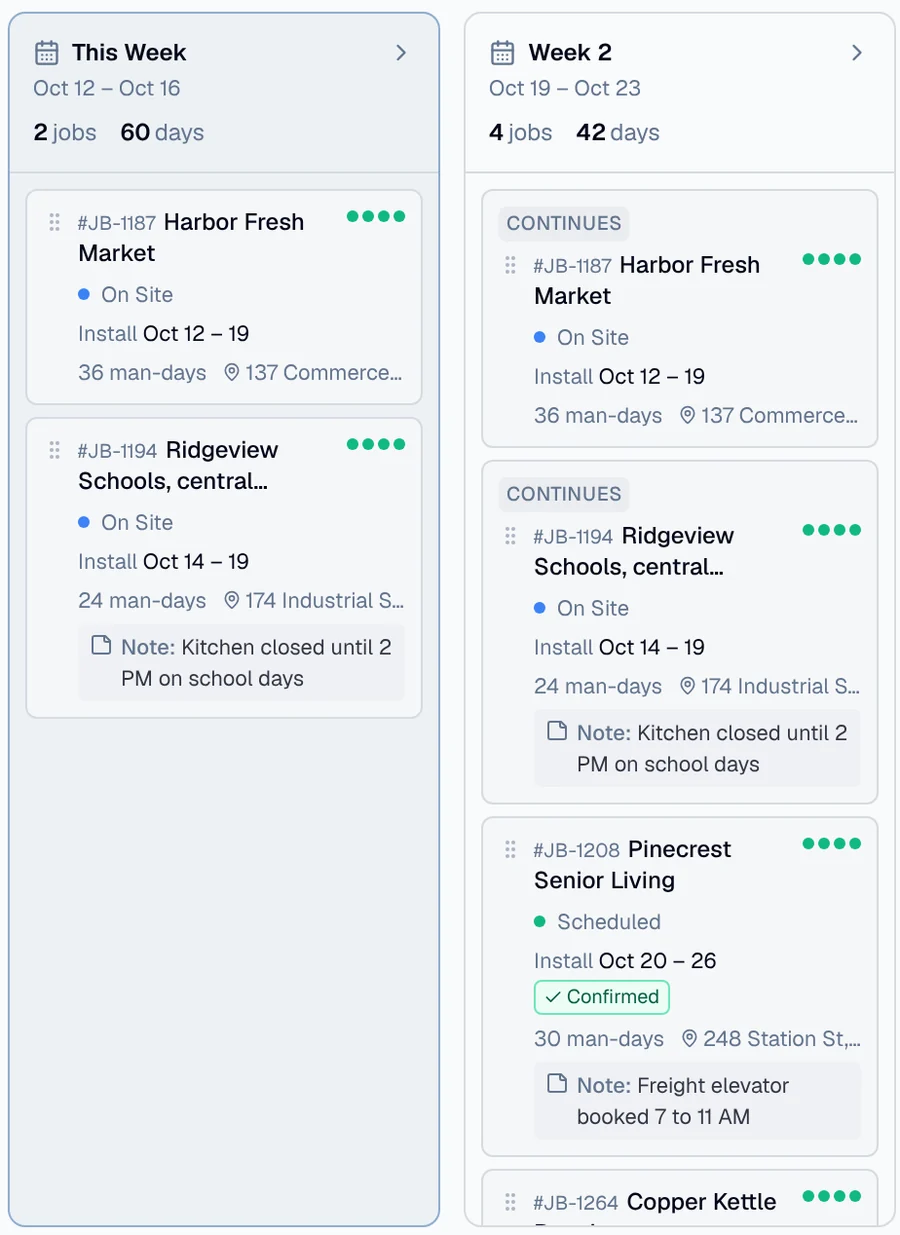
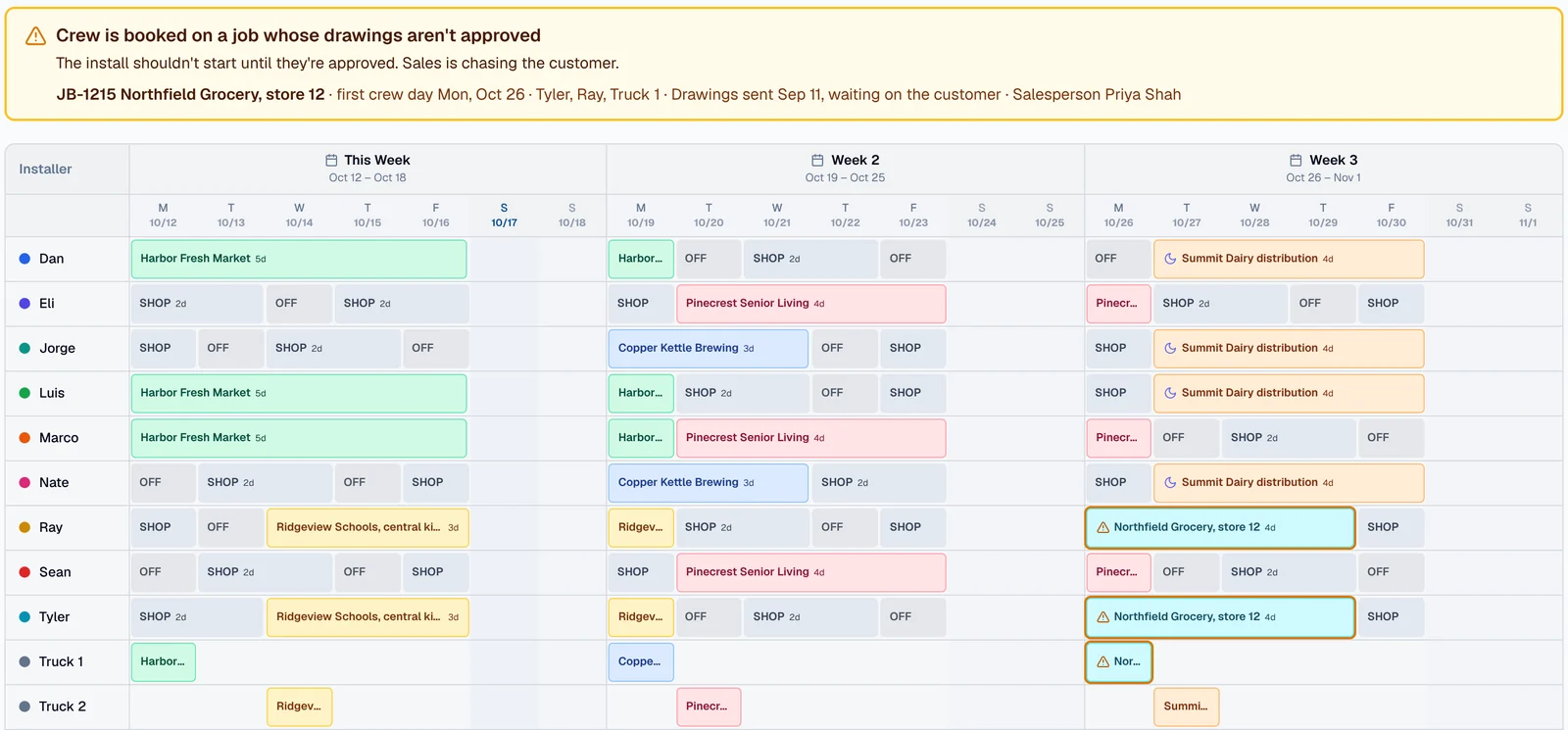
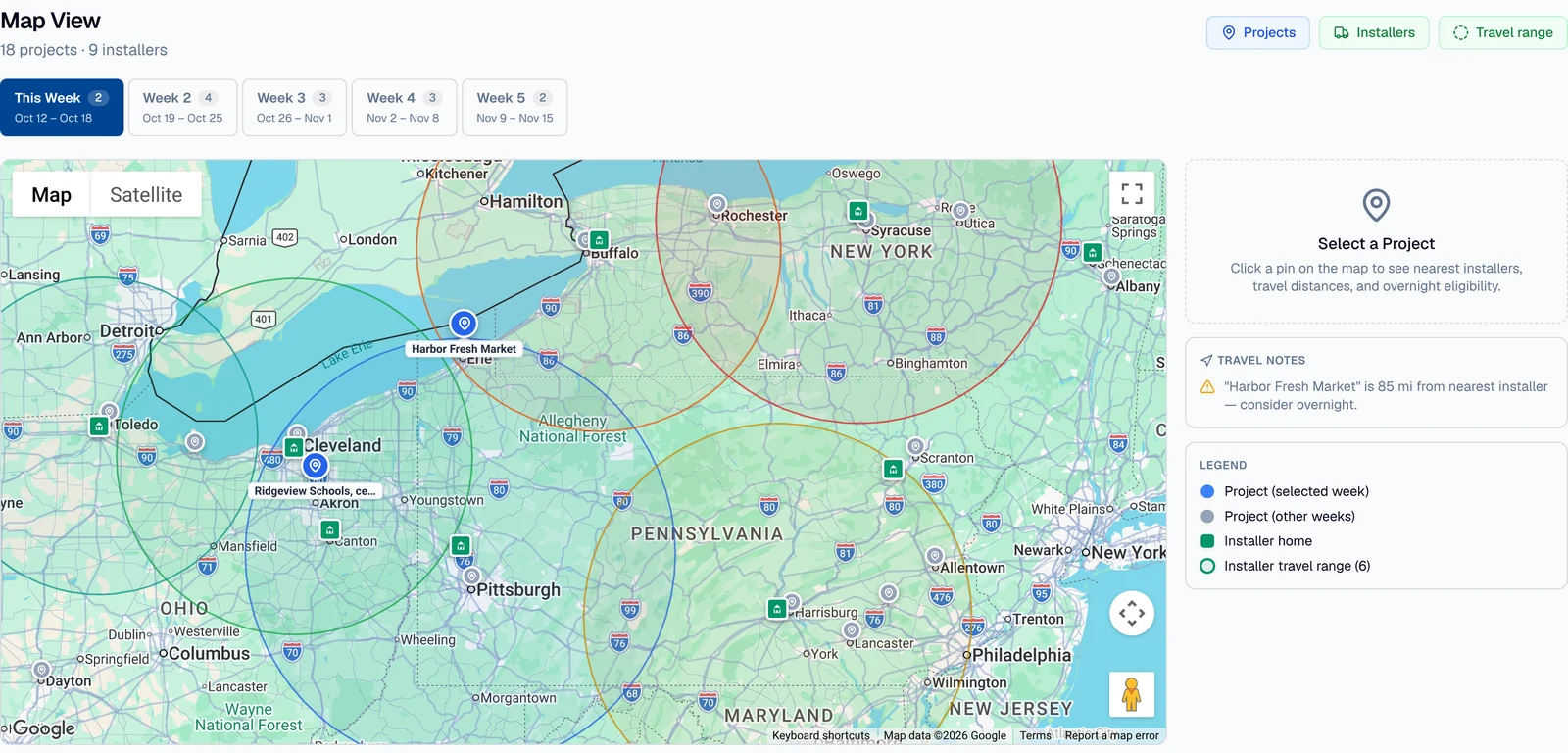
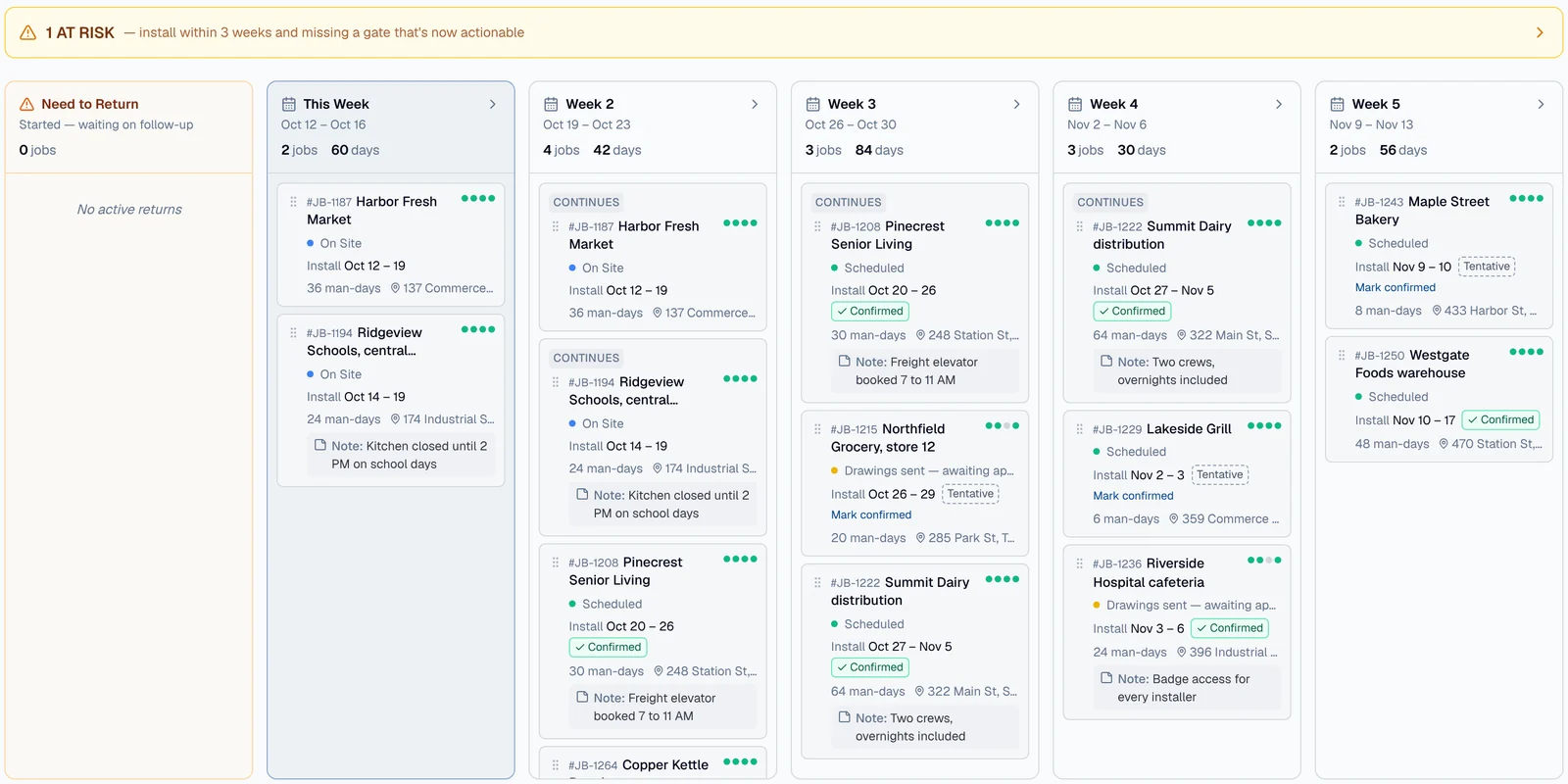
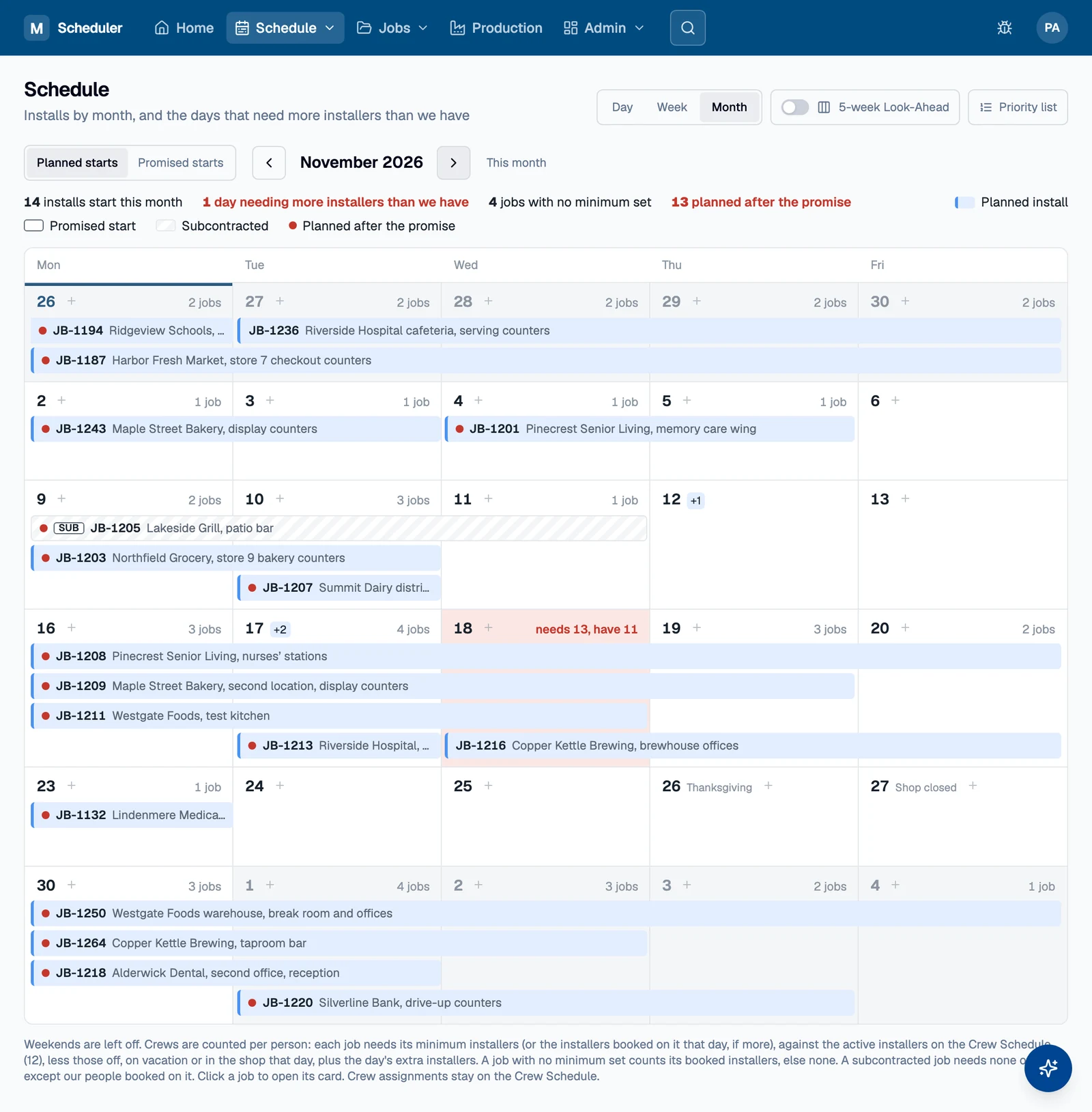
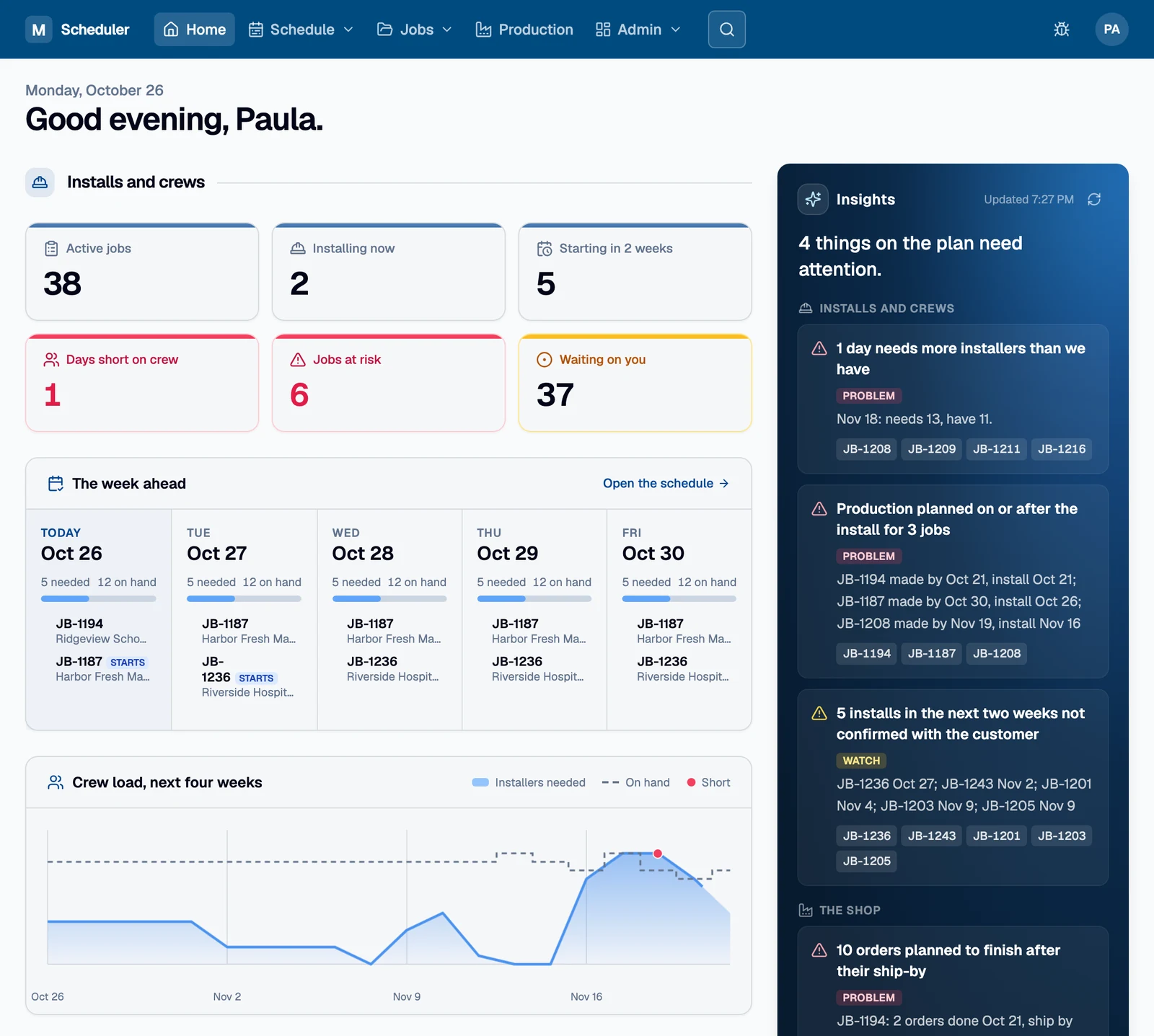
Five weeks out, with the risks on top
Every job sits in the week it's worked. A job booked within three weeks with a step still open is flagged at risk.Who goes where
Every installer and truck for three weeks, with shop days and time off. The map draws each installer's travel range around home, so a job outside every ring stands out as an overnight.The shop against the install date
Each job's shop orders are lined up ahead of its install. An order that finishes after the ship-by date shows in red.Today's job on the installer's phone
Directions, drawings and photos for the job, and the week ahead. Sales documents never reach the field. A quote won in the quoting tool becomes a job on the board within about 15 minutes.
The agents
Agents flag. A person decides.
Agents read the scheduling email and file each message on its job. They check the schedule against your rules (a crew booked twice, a pairing rule broken, a job too far for its crew, a step still open close to the install) and lay out what they found. They're advisory: a person makes every scheduling decision.
What changed
It's live, and the old schedule is retired.
The spreadsheet, the board and the old database are gone. Agents suggest and flag, and a person makes every scheduling decision.
More examples
Other tools we've built.
 Quoting and the pipeline
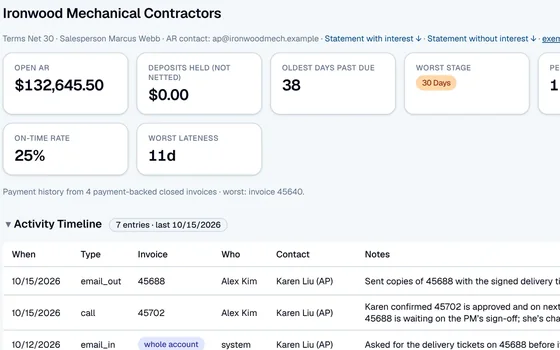 Collections
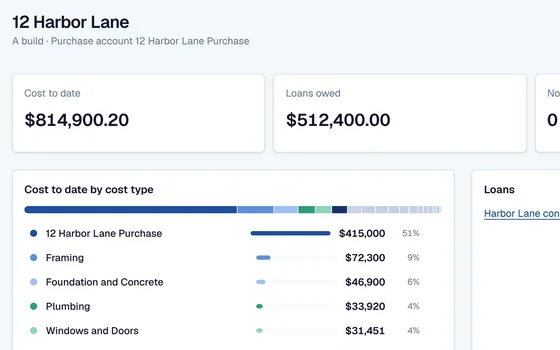 Bookkeeping and project costs
 Sales portal
Which workflow costs you the most?
Tell us about it. We'll listen, then map it with you.
Or write to hello@staynative.ai